Mosaic Wayside Shrines
Roadside shrines, memorial crosses and open-air chapels rendered in gold-ground mosaic, natural stone and hand-painted stained glass — devotional landmarks built to withstand a full continental climate.
Monumental troițe, engineered to weather generations
A Romanian tradition, raised to monumental scale
The troiță is the oldest form of public sacred art in the Romanian landscape. From the simple wooden crosses at village crossroads to the monumental stone ensembles commissioned by medieval voivodes, the wayside shrine marks a place — a junction, a boundary, a memory, a vow of thanks — and turns it into a space of prayer.
At the Aaron Art atelier we continue that tradition in the vocabulary of Byzantine art: gold-ground mosaic, Venetian smalti, weather-grade natural stone and hand-painted stained glass protected in a metal frame. Every shrine is a bespoke commission, sized for its site — a county-road intersection, a monastery precinct, a cemetery walkway or a memorial park.
We collaborate with parish communities, founding families and local authorities, respecting both the Orthodox canon and the technical requirements of a site exposed to wind, frost and solar radiation.
Structure, materials and durability
A correctly built shrine has three layers: a load-bearing structure (reinforced concrete, stone or treated oak), the artistic skin (mosaic, stained glass, carved stone) and a protective roof (copper sheet, wood shingle or stone). Each layer is engineered for at least one hundred years of uninterrupted exposure.
The mosaic used on exterior surfaces is either Venetian smalto or the studio's patented double-glazed mosaic — both unaffected by UV, freeze-thaw cycles and acid rain. Shrine stained glass is executed in tin-suture technique and mounted inside a laminated safety unit, so it resists vandalism and wide thermal swings.
The mosaic is bonded with mineral adhesives of controlled elasticity, and the joints are filled with hydrophobic grouts. Foundations are calculated for the reference wind and snow load of the specific geographic zone.
Iconographic program
The iconography of a wayside shrine starts from the patron feast of the site, the protector saints of the founding family and the memorial context. Classical compositions include the Crucifixion, the Mother of God of Sorrows, Saints Constantine and Helen, military saints and scenes of the Resurrection.
We deliver full-colour scale sketches, painted maquettes for approval and, when requested, a one-square-metre sample panel for the gold-ground area. The iconographic program is established together with the parish priest and, where applicable, with the Eparchy or the local heritage commission.
Private, parish and memorial commissions
We build wayside shrines for private cemeteries, monastery courtyards, village entrances, sites of accidents and memorial parks. For private commissions, discretion is guaranteed; for public ones, we work directly with the authorities on permitting and siting.
Lead times for a monumental troiță range from four to nine months, depending on size and the complexity of the iconographic program. The commission includes plinth, discreet night-time lighting and a technical maintenance file.
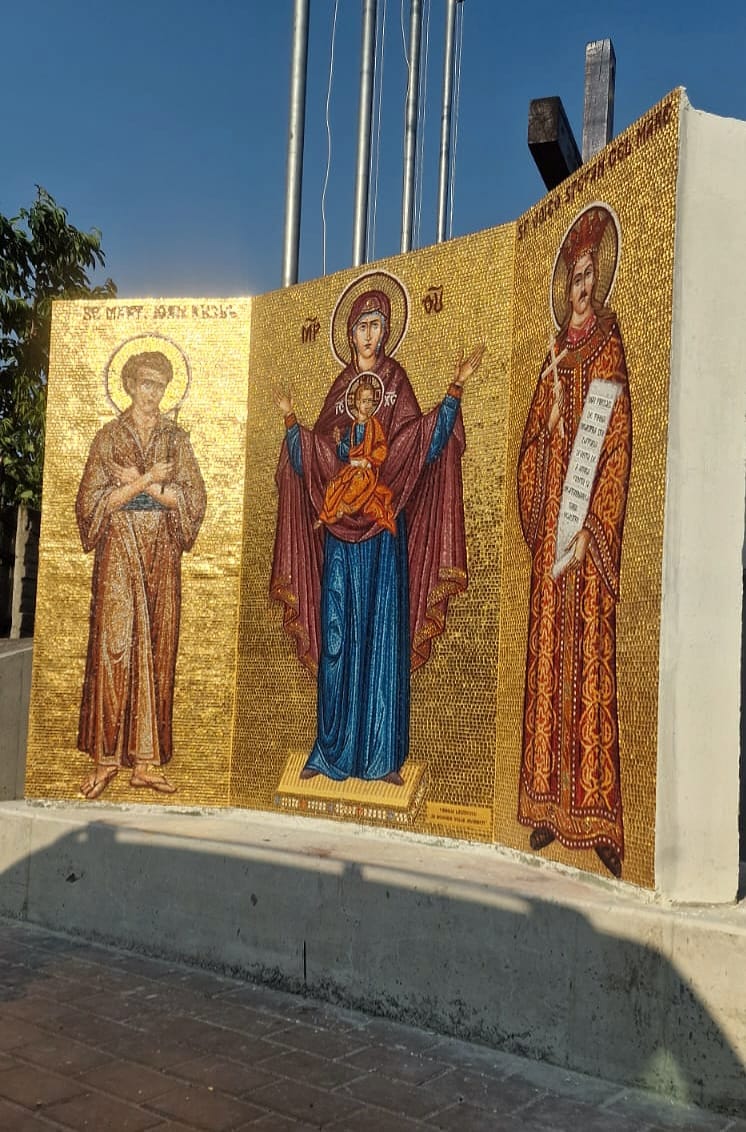
Roadside Shrine
Three Saints Mosaic
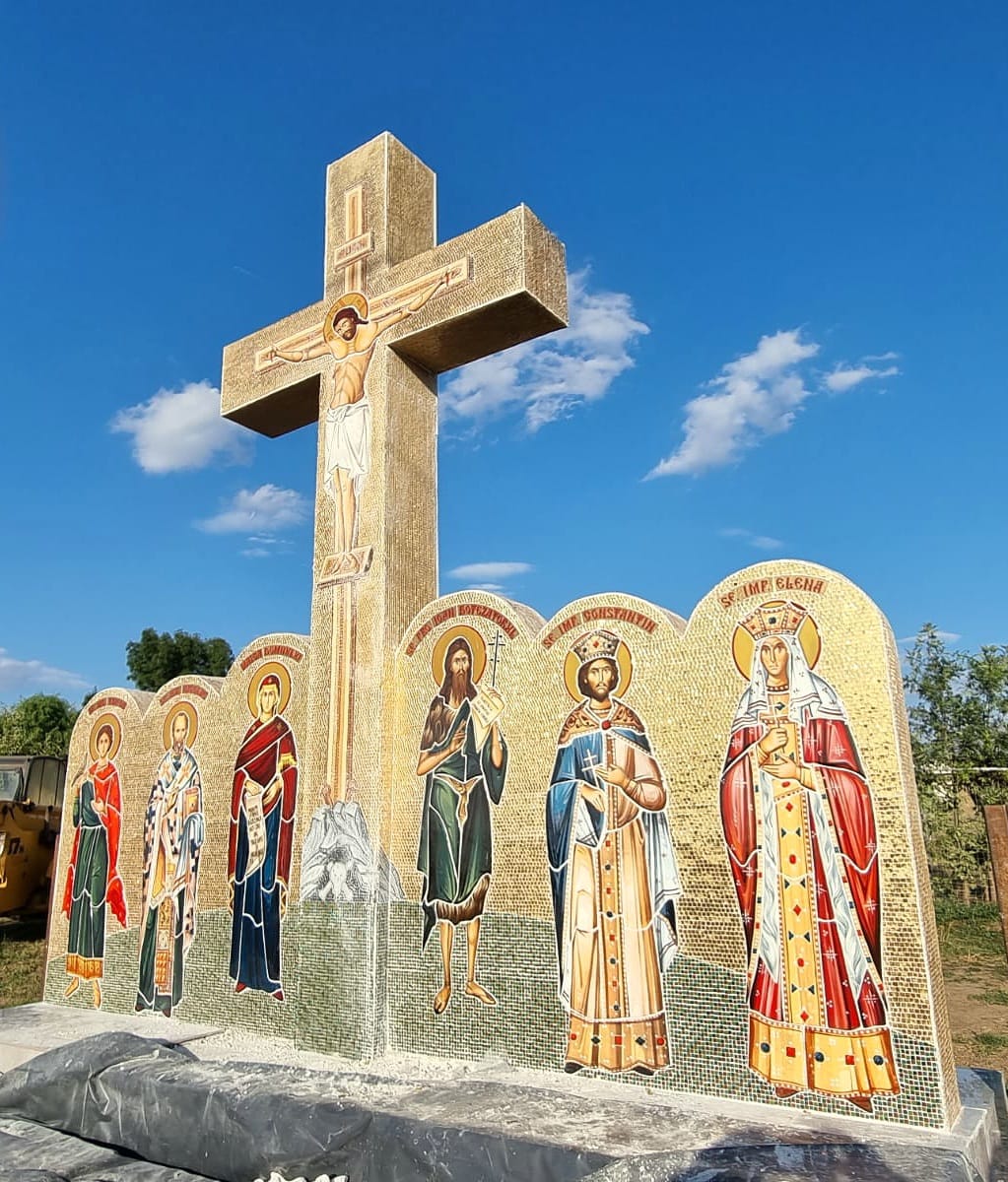
Memorial Troiță
Cross with Saints
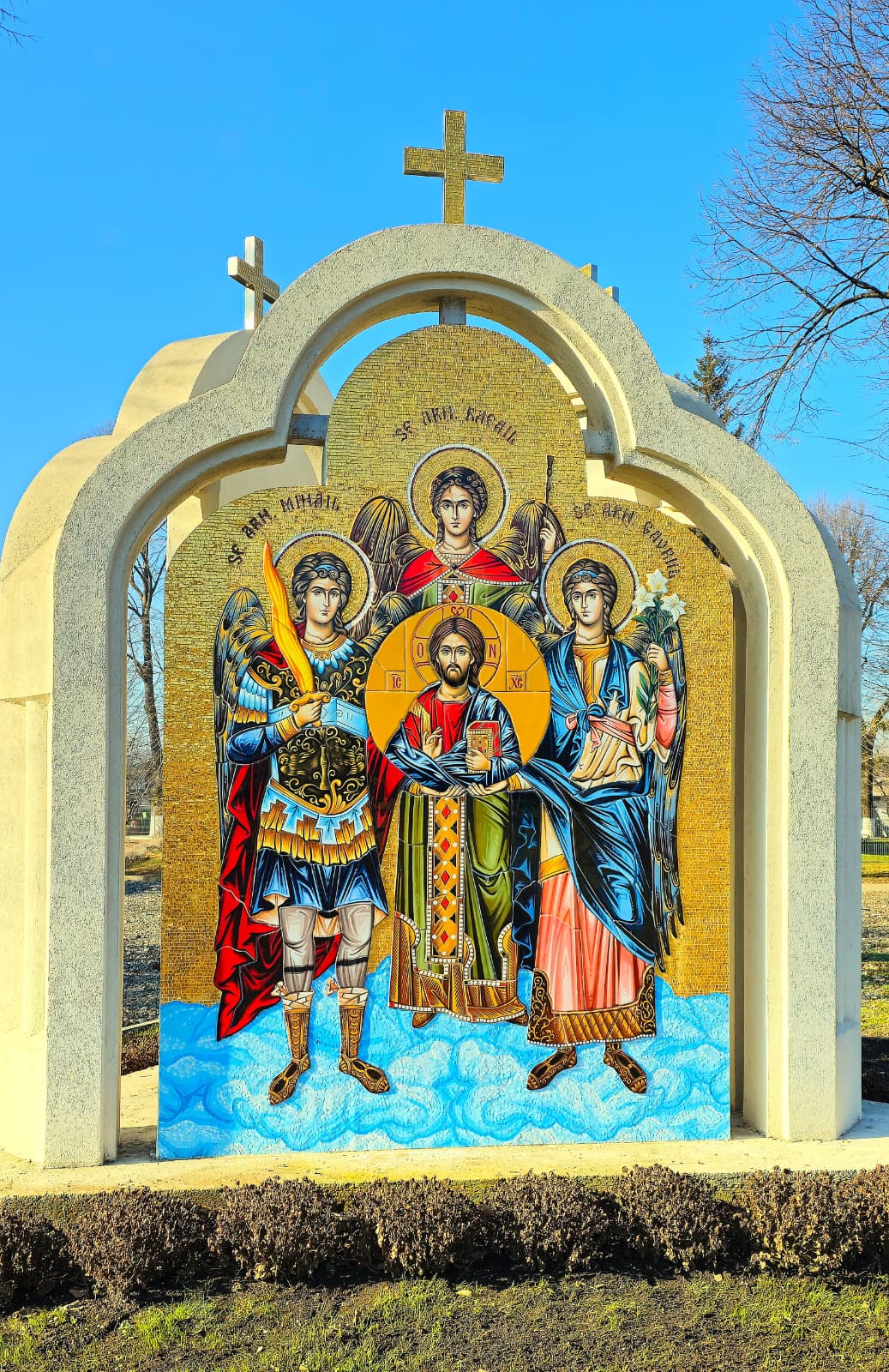
Wayside Shrine
Holy Archangels & Christ
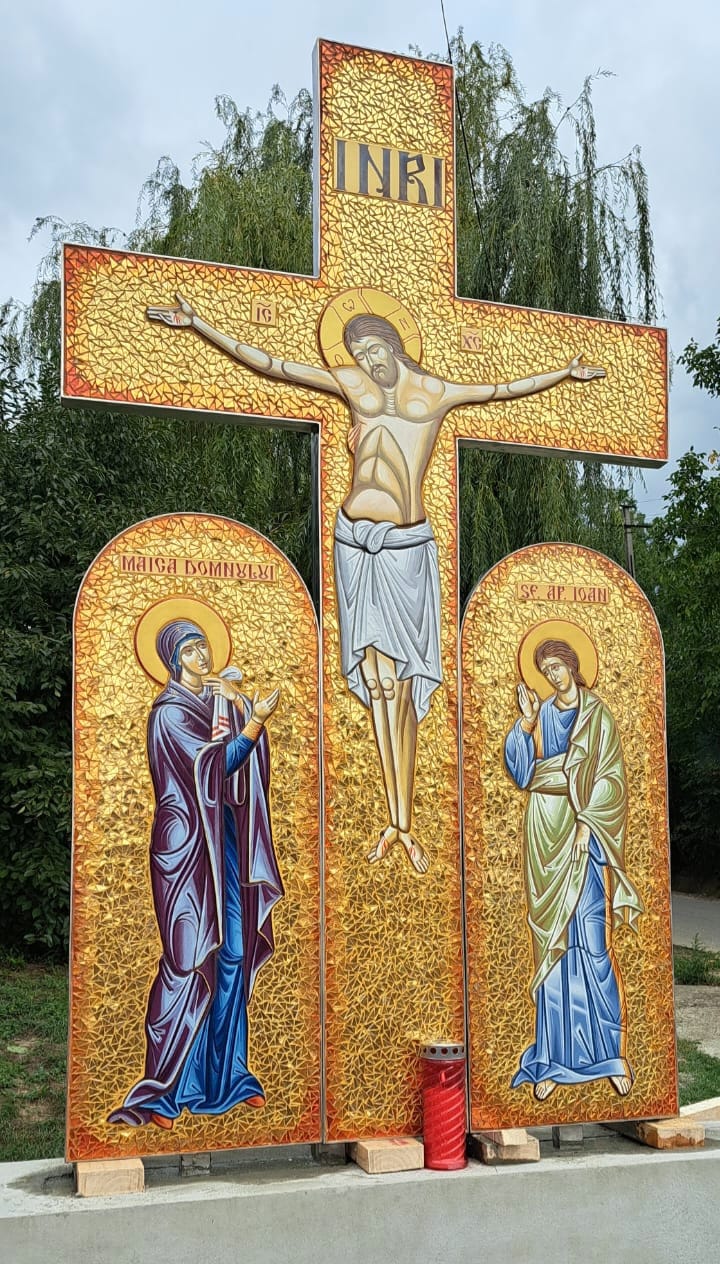
Roadside Troiță
Crucifixion Triptych
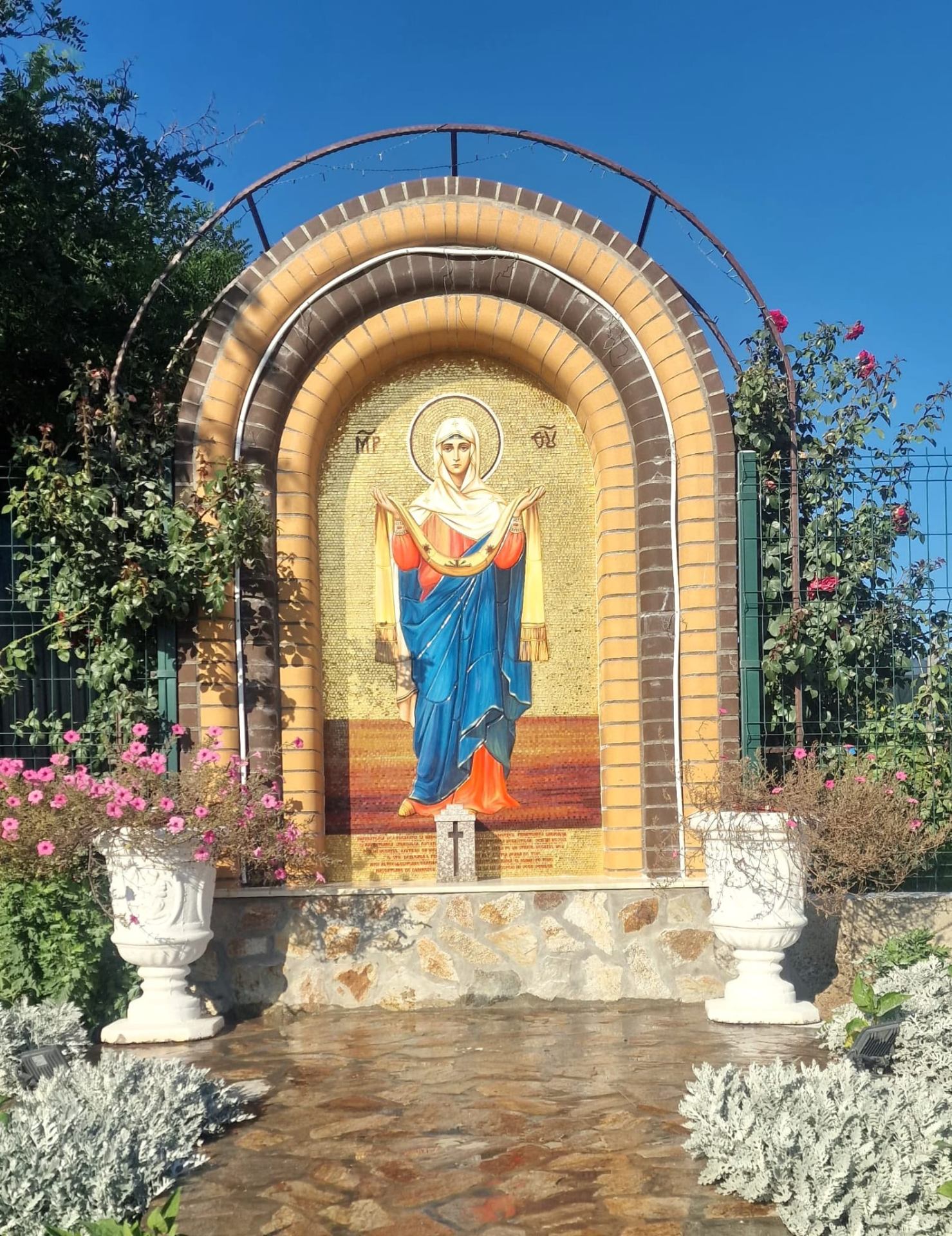
Garden Shrine
Theotokos Orans
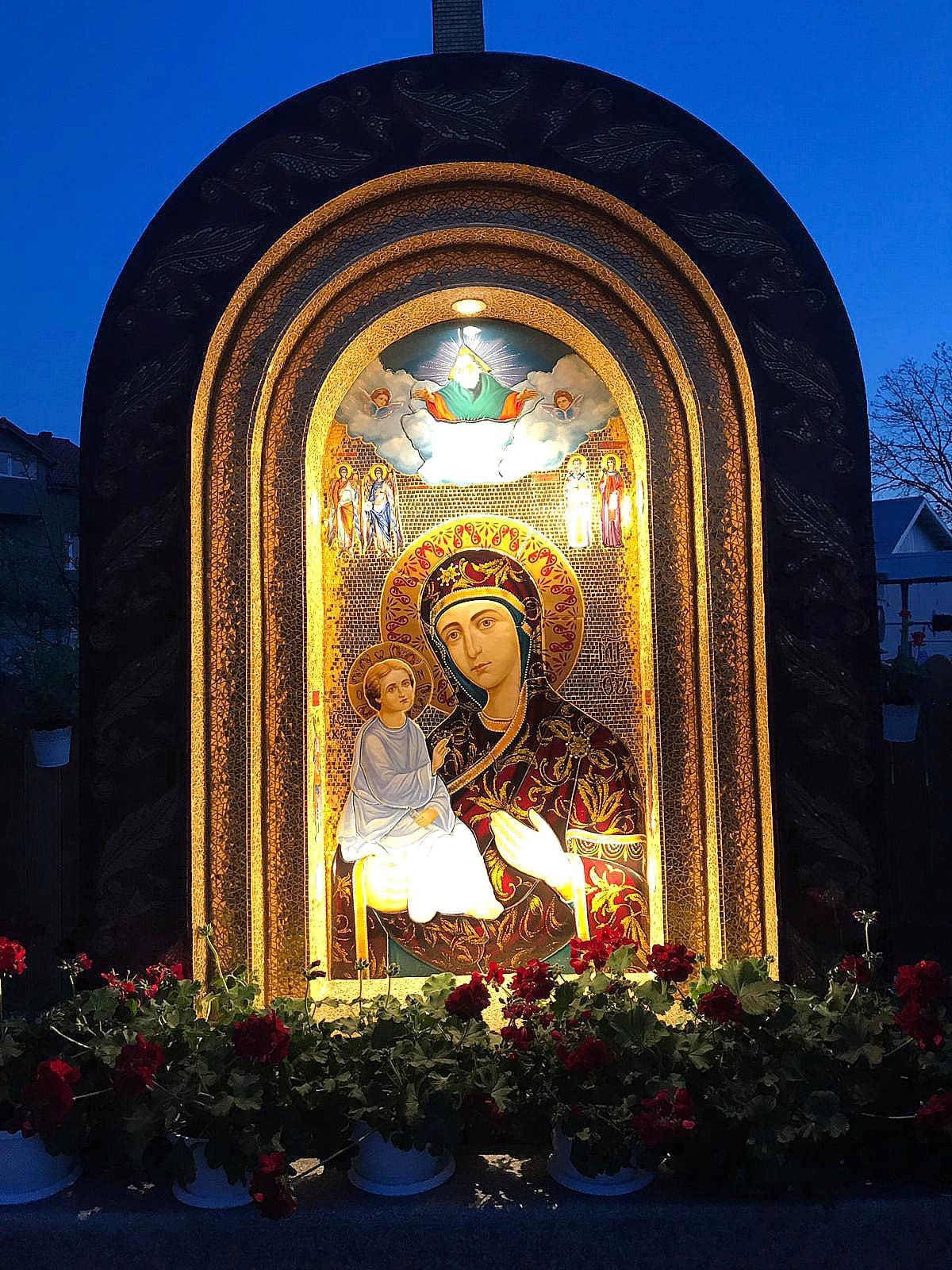
Illuminated Shrine
Theotokos with Child
Selected works
The crossroads shrine with the Crucifixion, the memorial cross with the Mother of God, the parish troiță with military saints, the open-air chapel with gold-ground mosaic and the private cemetery shrine — six representative projects the atelier has delivered in Romania and for Romanian communities abroad.